How to Raise Chicks in Broodwing
Eggs, hunger caps, feeding runs, and nest defense that actually works.
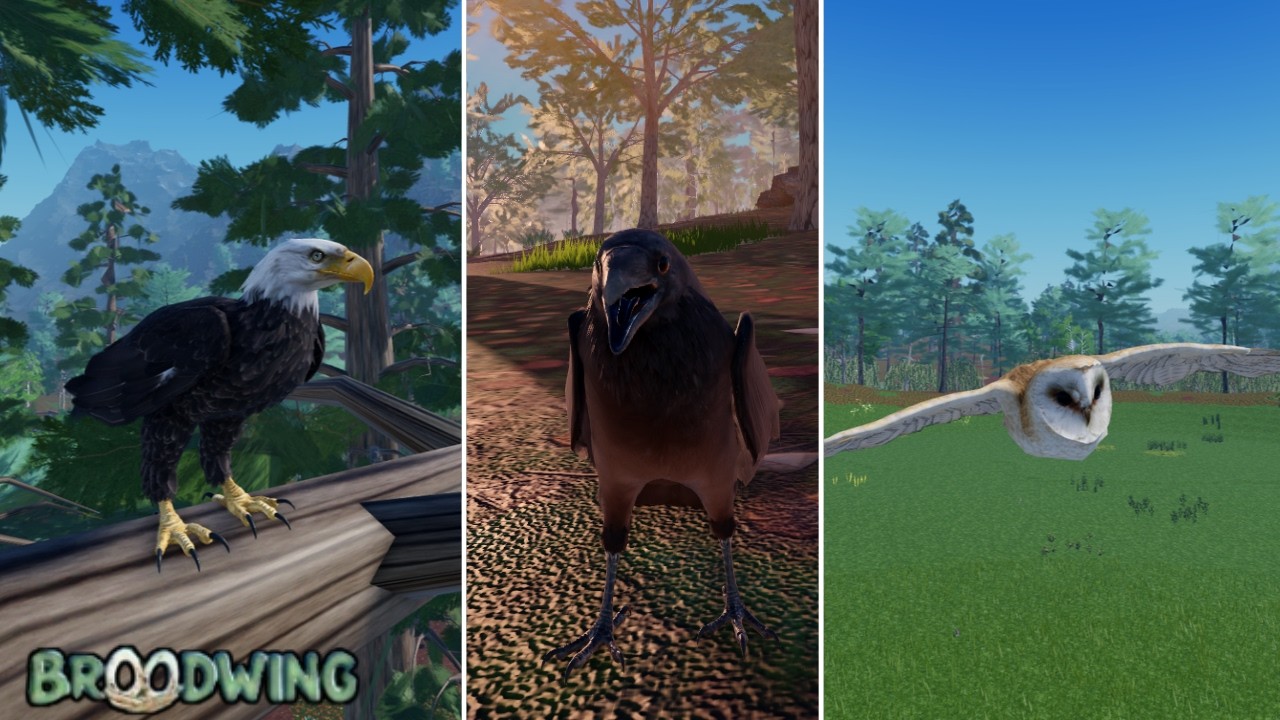
Raising chicks is the emotional core of Broodwing. After you pick a bird, learn to fly, and finish a nest, the game shifts into a schedule: manage hunger, lay within the egg cap, hatch young, answer begging, and keep eagles and ravens from wiping the brood. This guide assumes you can already perch with Q and complete the stick → moss → dry grass → down feathers build from How to Build a Nest. If not, start with Getting Started and return when the nest is ready.
Pair this page with birds so you feed the correct food, the tier list so you know which visitors are dangerous, codes for Plume top-ups between runs, and updates when hatch timers or family tools change.
Eggs: hunger first, ego second
Egg count is capped and gated by hunger. Laying costs food. If you spam eggs while starving, you create a brood you cannot support. Eat a full meal matched to your species before each lay:
- Eagles: hunt hares or birds; finish carcasses before the ~2.5 minute window ends.
- Mallards: cattails and water-edge plants.
- Geese: grass.
- Ravens: graze, while also being excellent material runners.
- Owls: mice near hollows.
- Cardinals: berry bushes.
Expect cooldowns between eggs. One documented raven-style run laid five eggs total with waits and food costs between them; owl coverage often cites up to four eggs in a hollow with hunger drops each time. Treat those numbers as play patterns, not forever balance — confirm shifts on updates.
Player eggs show usernames; NPC eggs use labels like “egg one” or “gosling one.” Knowing the difference helps when you invite friends to hatch as your young versus raising AI chicks in the same nest.
Hatch and the begging phase
After laying, stay close enough to respond when timers finish. Hatchlings beg. Begging is not flavor text — it is your queue to leave on a short food circuit and return. Long sightseeing flights during early chick life are how nests die.
Feeding usually means selecting the correct chick and using the interact hold (commonly E in update coverage) to deliver food. Practice the interact in a calm moment so you do not fumble while an eagle circles. Owls delivering mice to owlets follow the same idea inside a hollow — details in How to Play Barn Owl.
Ducklings and other wetland young should hide in cattails when eagles pass. Teach family members that cover beats open grass. Juvenile stages may move more carefully and still depend on adults; do not assume a fledgling can solo the valley.
Build a two-adult schedule
Solo parenting is possible but brittle. Ideal loop:
- Adult A guards the nest lip or hollow mouth.
- Adult B runs the shortest food route for the species.
- Adults swap when hunger on the forager drops or a threat appears.
- Nobody starts a vanity flight while chicks are begging.
Bald Eagle packs can assign a guardian male to hunt support — see How to Play Bald Eagle. Mixed families should still agree who is allowed to leave. Communication beats raw flight skill.
Use map and family name tags after hunting so you can regroup fast. If you lose the nest visually, open the map rather than zigzagging while chicks starve.
Defense: eagles, ravens, and empty nests
Eagles kill birds and pressure open nests. Ravens threaten eggs and young and may enter hollows. Never leave a brood alone for a long carcass chase. If you must fight, fight at the nest with a partner, not halfway across the valley with food in talons.
Threat responses that work:
| Threat | Sign | Response |
|---|---|---|
| Eagle dive lane | Silhouette above open ground | Call guardian home; hide young in cover |
| Raven at hollow | Bird entering nest space | Return immediately; contest the opening |
| Hunger crash after laying | Parent starving | Feed parent before next egg |
| Missed perch with food | Dropped or delayed delivery | Practice empty Q landings, then retry |
| Lost partner | No family tag nearby | Map regroup before another lay |
Predators on your own team should still respect carcass timers. Killing a hare far from the nest and eating slowly can waste the only meal your chicks needed. Eat enough to stay functional, then ferry what the brood requires.
Species-specific chick notes
- Wetland birds: Keep cattail escape routes clear; ducklings should not loiter on bare banks.
- Ravens: Strong at restocking materials and grazing mid-parenting; still watch for eagle grabs.
- Eagles: Extra growth stages (fledgling → juvenile → adult) mean longer dependency windows; plan more guardian time.
- Owls: Hollow interiors help, but ravens and eagles still punish unattended owlets; keep a mouse ready before laying drains hunger.
- Cardinals: Berry circuits should be short loops with cover, not cross-map pilgrimages.
Browse birds for role reminders and the tier list when a new species shifts who rules the sky.
Roleplay without losing the brood
Family roleplay is encouraged — just schedule it. Pose, screech, and tell stories while one adult remains on watch. Hatch-as-egg players should practice begging positions that do not block the perch lip. When sub-adults are ready to leave, coordinate so the nest is not emptied of guardians during a raven visit.
Redeem codes between quiet moments, not while three chicks beg. After patches, skim updates for hatch timer or tool changes, then adjust this routine. The Guides Hub links nest and species deep dives if you need to rebuild fundamentals.
Failure recovery
If the brood is lost, do not rage-rebuild on the same exposed lip. Eat, restock materials, pick a site with a cleaner perch (see the nest guide), and restart with a partner. Second attempts are faster because food routes and Q landings already exist. Broodwing rewards calm logistics; treat every failed nest as route data, not as a reason to pick a harder cliff.
Master hunger before laying, answer every beg with a short loop, and never leave eggs alone under eagle skies. That is the entire chick meta.
Frequently Asked Questions
Quick answers to the most common Broodwing questions.
Why can’t I lay more eggs?
Eggs are capped and gated by hunger. Eat a full species-appropriate meal and wait out any lay cooldown before trying again.
How do I feed chicks?
Bring the correct food, select the begging chick, and use the feed interact (often hold E). Practice before you are under attack.
What threatens Broodwing nests the most?
Eagles and ravens. Keep at least one adult on guard and avoid long solo hunts while young are begging.
How do player eggs differ from NPC eggs?
Player eggs show usernames; NPC eggs use generic labels. Both can share a nest, so read the name before you assume who will hatch.